Newton's principia, first book sections I, II, III, with notes and illustrations and a collection of problems, principally intended as examples of Newton's methods (1900)
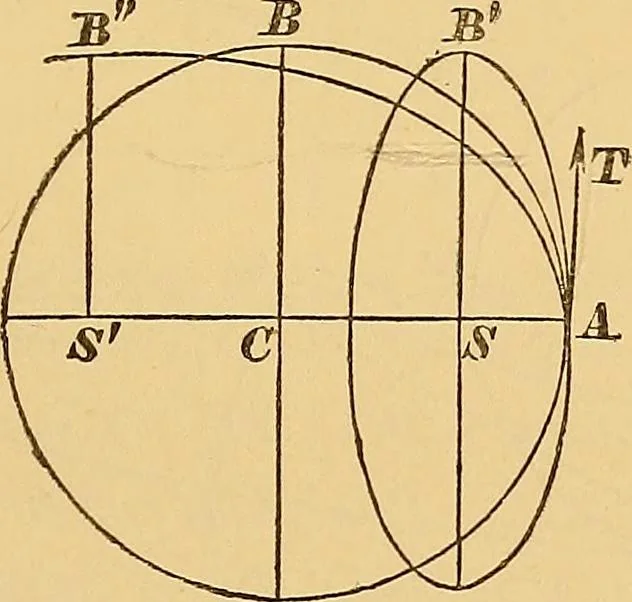
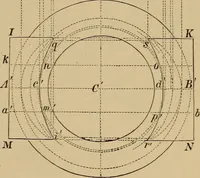
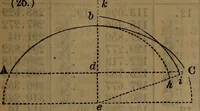
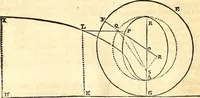
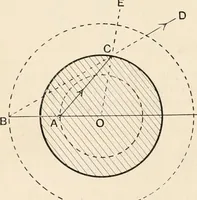
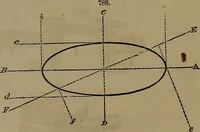
es through the hody; to findthe subsequent motion of the hody. Since the force varies as the distance, and is attractive, theorbit will be an ellipse. And, since the force is a finite force,the body will move in the same direction as before, at themoment of the change. Also, the velocity will, for… … Then V^=fi.CA.CA = [i.CA, and if 8, the new point towhich the force tends, be in CM, let AB be the ellipse described,8A will be one of the semi-axes of the ellipse, since A is an 212 NEWTON. apse, and, SB being the other, if a body revolved in this ellipseround 8, fj,. SB would be the square of the…
Mechanics · Celestial mechanics
Internet Archive · Boston Library Consortium · Public Domain Mark 1.0. Free to use for anything.