Newton's principia, first book sections I, II, III, with notes and illustrations and a collection of problems, principally intended as examples of Newton's methods (1900)
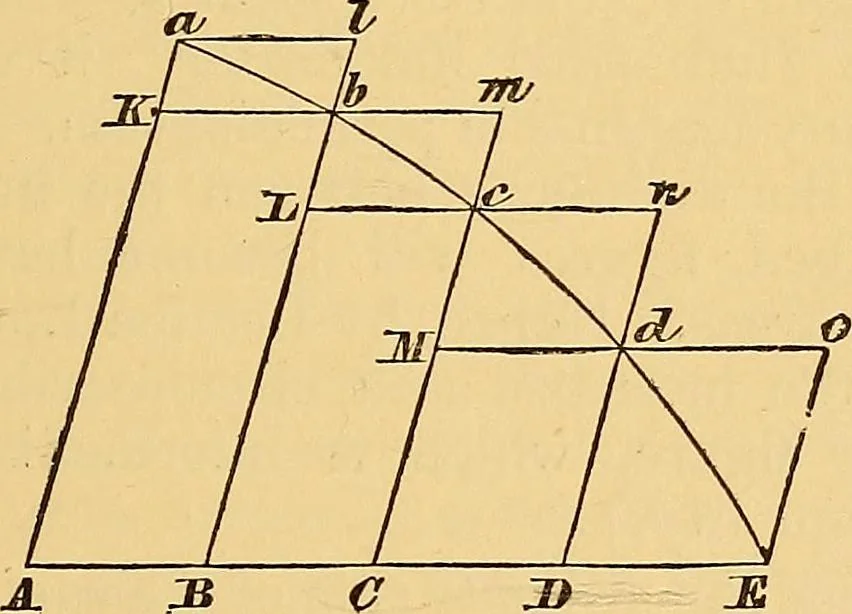
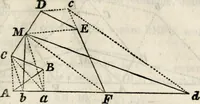
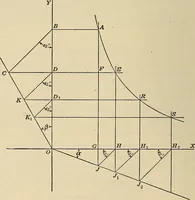
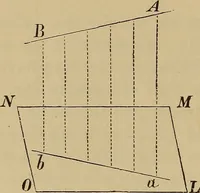
acE^ any number of parallelograms Ab, Be,Gd, Sfc. he inscribed upon equal bases AB^ BC, CD, ^c,and having sides Bb, Oc, Bd, ^c. parallel to the side Aaof the figure ; and the parallelograms aKbl, bLcm, cMdn,^c. be completed; then, if the breadth of these parallelo-grams be diminished, and the… … For the difference of the inscribed and circumscribedfigures is the sum of the parallelograms Kl, Lm, Mn,Do, that is (since the b^ses of all are equal) a paral-lelogram whose base is Kb, that of one of them, andaltitude the sum of their altitudes, that is, the paral-lelogram ABla. But this…
Mechanics · Celestial mechanics
Internet Archive · Boston Library Consortium · Public Domain Mark 1.0. Free to use for anything.