Herschel, John F. W. (John Frederick William), Sir, 1792-1871 · London : Longman, Brown, Green, Longmans, and Roberts · leaf 310
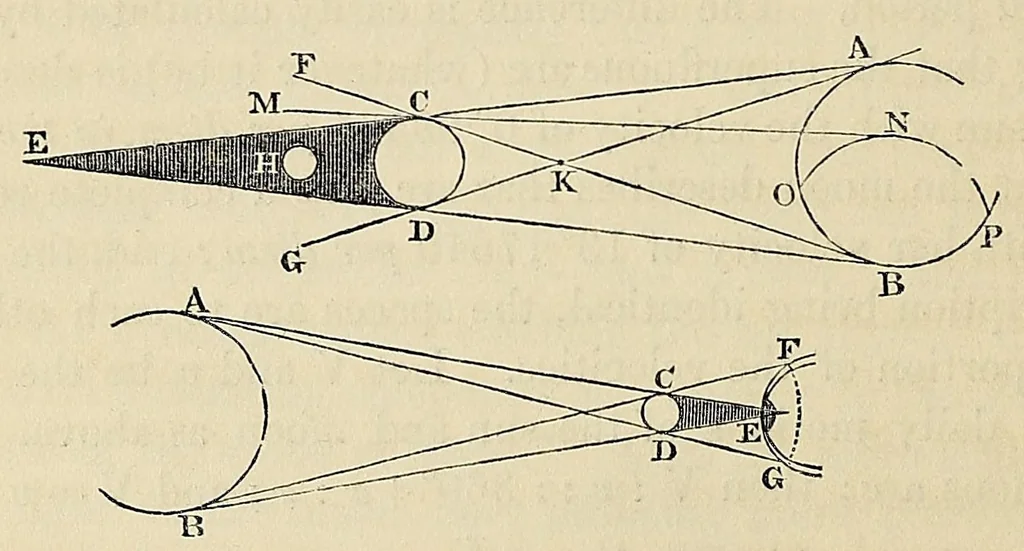
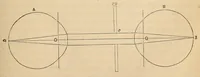
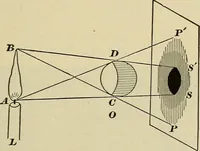
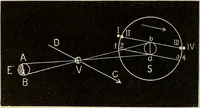
the greater size of the circle, it is only partially seen at any one time. Now, a body which always casts a circular shadow must itself be spherical. (420.) Eclipses of the sun are best understood by re¬ garding the sun and moon as two independent luminaries, each moving according to known laws,… … represent the sun, and C D a spherical body, whether earth or moon, illuminated by it. If we join and prolong A C, B D ; since A B is greater than C D, those lines will meet in a point E, more or less distant from the body C D, according to its size, and within the space C E D (which represents a…
Astronomy
Internet Archive · Smithsonian Libraries · Public domain (published before 1931). Free to use for anything.