Plane and solid analytic geometry; an elementary textbook (1901)
Ashton, Charles H. (Charles Hamilton), 1866- · New York, C. Scribner's sons · leaf 121
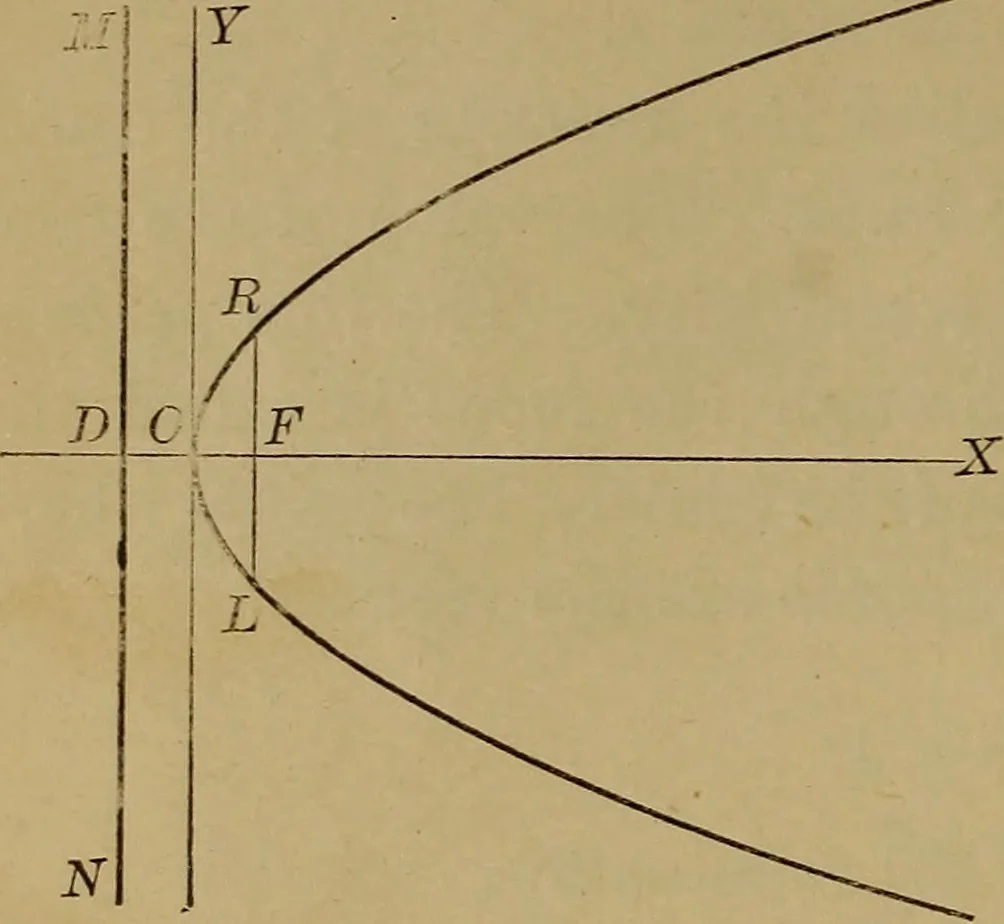
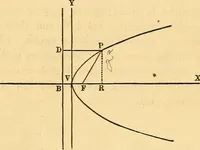
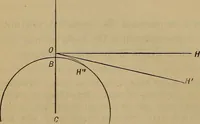
2 irioc. [3^] From this equation we see that the curve passes throughthe origin; that it is symmetrical with respect to theX-axis ; that it is real only to the right of the y-axis;and that as x increases, y increases, —■ at first morerapidly than x, until x——, then more and more slowly.It has,… … equa tion >4] becomes2 m cos 0 Eig. 5G. sin2 tf When 0 == 0, p is infinite,and the curve, therefore,does not cut the X-axisa second time. But ifwe give to 6 any finitevalue, however small, pwill have a finite value,which will be very largefor small values cf 0, and will decrease as 6…
Geometry, Analytic
Internet Archive · Library of Congress · Public Domain Mark 1.0. Free to use for anything.