Plane and solid analytic geometry; an elementary textbook (1904)
Ashton, Charles Hamilton, 1866-1936 · New York, C. Scribner's Sons · leaf 119
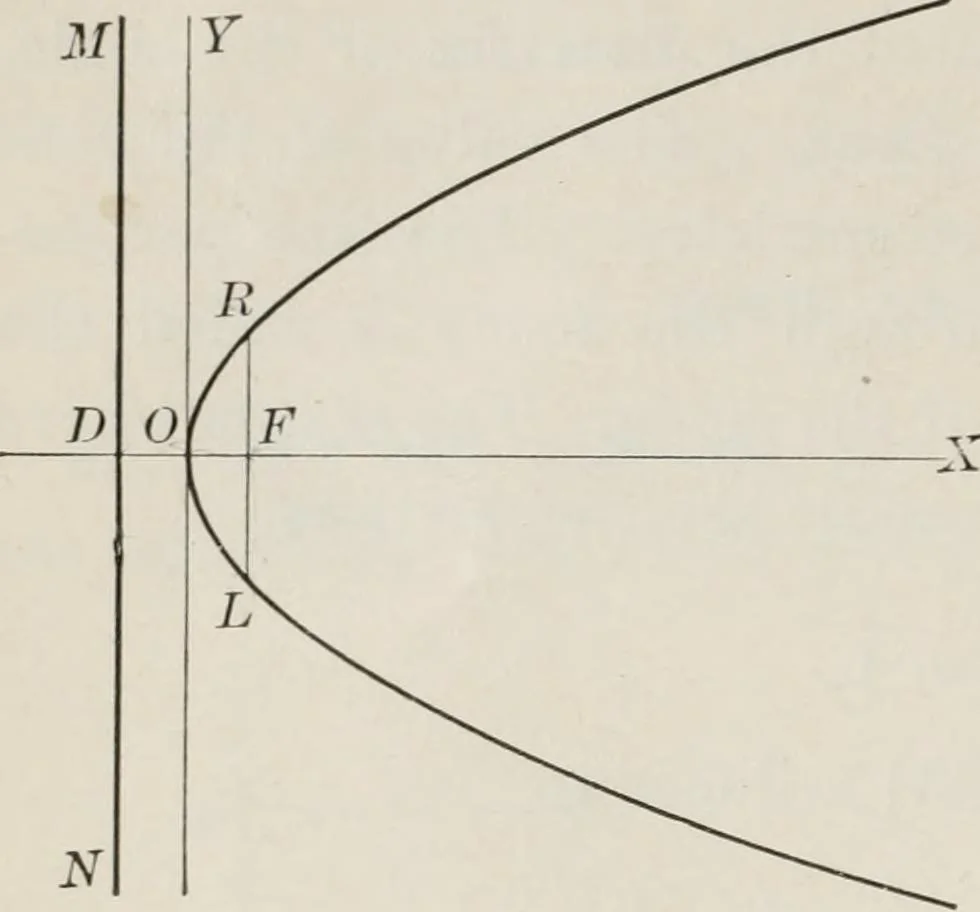
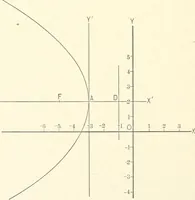
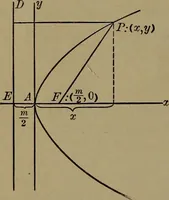
oint as origin. The equations of transformation are(by [20]) x = x +-9> and y = y Substituting these values, the equation becomes y2 = 2 moc. [34] From this equation we see that the curve passes throughthe origin; that it is symmetrical with respect to theX-axis ; that it is real only to the… … But, for the study of the distant points, polar coordinatesare better adapted. Transforming to polar coordinates with 0 as origin, equa-tion [34] becomes _ 2 m cos 6 p~ sin2 e When 6 = 0, p is infinite,and the curve, therefore,does not cut the .X-axisa second time. But ifwe give to 6 any…
Geometry, Analytic
Internet Archive · California Digital Library · Public Domain Mark 1.0. Free to use for anything.