The practical astronomer : comprising illustrations of light and colours, practical descriptions of all kinds of telescopes, the use of the equatorial-transit, circular, and other astronomical instruments, a particular account of the Earl of Rosse's large telescopes, and other topics connected with astronomy (1845)
Dick, Thomas, 1774-1857 · London : Seeley, Burnside, and Seeley · leaf 365
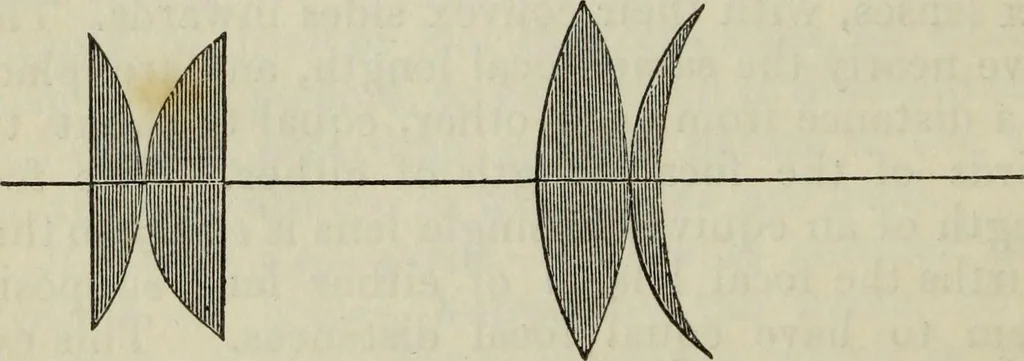
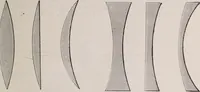
he cube of 2. So three times the cubeof 1 is only one ninth of the cube of 3/ &c.Hence the indistinctness of the borders of thefield of view of a telescope is diminished by in-creasing the number of lenses in an eye piece.Sir J. Herschel has shown that if two plano-con-vex lenses are put… … second as 1 to 2.3. If their focal lengths are equal,the aberration will be 0.603, or nearly one half.The spherical aberration, however, may be entirelydestroyed by combining a meniscus and doubleconvex lens, as shown in fig. 76, the convex sides ON THE EYE-PIECES OF TELESCOPES. 341 being turned to…
Astronomy · Astronomical instruments · Telescopes
Internet Archive · Getty Research Institute · Public Domain Mark 1.0. Free to use for anything.
![An illustration from Colour vision [electronic resource] : being the Tyndall lectures delivered in 1894 at the Royal Institution (1895)](https://img.insideoutlibrary.com/img/200/ia-b21285913-55-0.webp)