Radio for everybody; being a popular guide to practical radio-phone reception and transmission and to the dot-and-dash reception and transmission of the radio telegraph, for the layman who wants to apply radio for his pleasure and profit without going into the special theories and the intricacies of the art (1922)
Lescarboura, Austin C. (Austin Celestin), 1891- · New York, Scientific American publishing company [etc.] · leaf 38
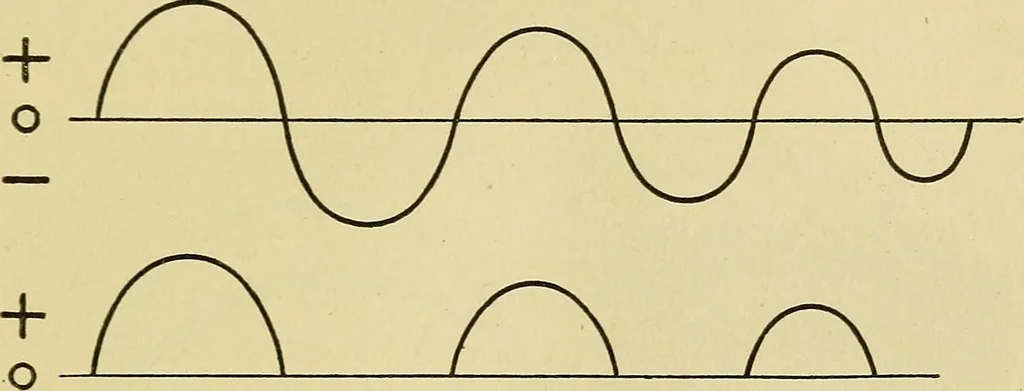
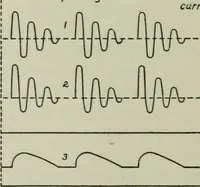
high frequen-cies, it does make audible the fluctuating potential of thewaves and reproduces the sounds uttered at the trans-mitter. In other words, it does not concern itself withthe carrier waves, but only with the sounds carried. Fitting the Radio Apparatus to the Task in Hand In entering upon… … Diagrammatic explanation of why a detector detects radiowaves. Tlie liigh frequency current produced by tlie inter-cepted wave is shown in the upper half of the diagram, Tvhilethe lower half shows how the detector, being a one-wayconductor, only permits half the current to flow^ through,therefore…
Radio
Internet Archive · Boston College Libraries · Public Domain Mark 1.0. Free to use for anything.