Ruskin, John, 1819-1900 · Boston : Aldine Book Publishing Co. · leaf 131
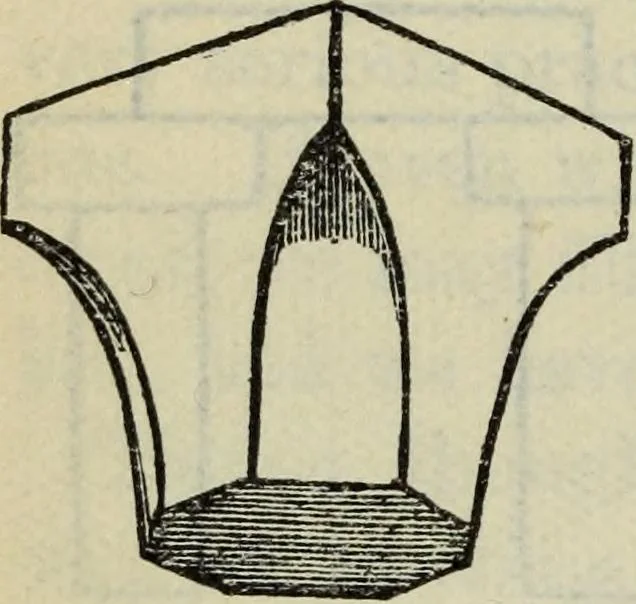
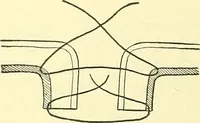
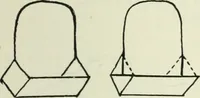
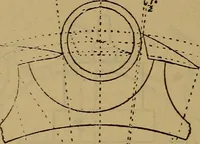
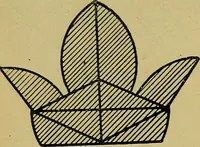
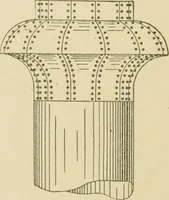
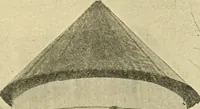
s, beginning at the corners of thesquare and widening the truncation downwards, so as to givethe form at g, where the base of the bell is an octagon, and itstop remains a square. A very slight rounding away of theangles of the octagon at the base of g will enable it to fit thecircular shaft closely… … or octagonal, the operation of cutting would be the same oneach angle; but there would be produced, of course, six oreight curves on the sides of e, and twelve or sixteen sides tothe base of g. § viii. The truncations in e and g may of course be executedon concave or convex forms of d and f; but e…
Architecture
Internet Archive · Getty Research Institute · Public Domain Mark 1.0. Free to use for anything.