Textile raw materials and their conversion into yarns : (the study of the raw materials and the technology of the spinning process) a text-book for textile, trade and higher technical schools, as also for self-instruction ; based upon the ordinary syllabus and curriculum of the Imperial and Royal Austrian weaving schools (1901)
Zipser, Julius, Salter, Charles · London : Scott, Greenwood · leaf 374
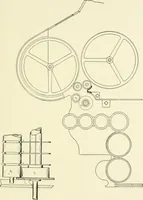
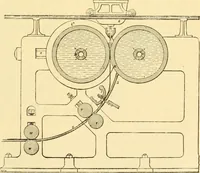
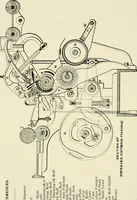
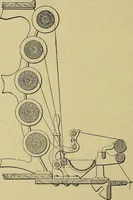
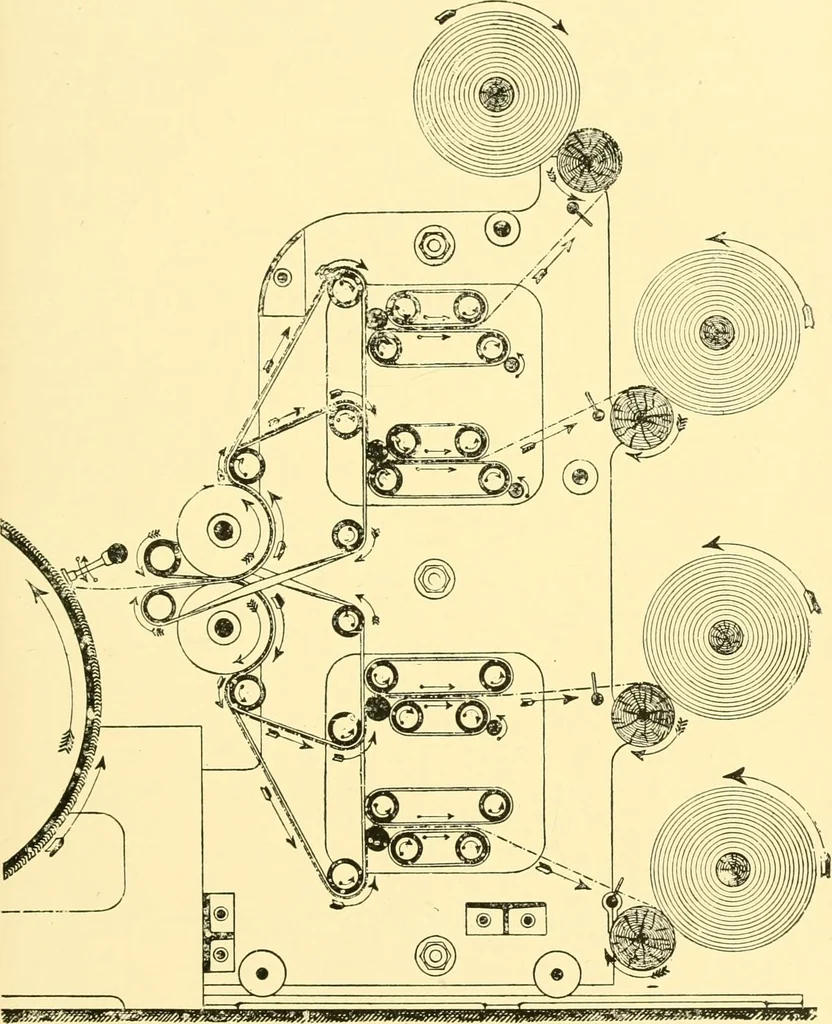
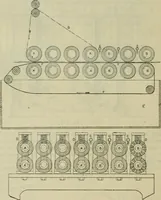
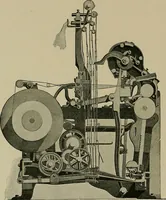
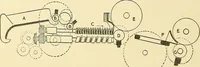
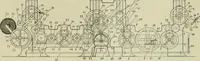
narrower belts to be used, so that 180 belts canbe set instead of 120 in the same width of machine, theresult being the production of a larger number of moreuniform and finer slivers. In place of grooved rollers, pulley rollers maybe employedfor driving the belts, the latter in that case being… … Fig. 235.—Belt Condenser with Four Sets of Rubbers (vertical section). 368 TEXTILE RAW MATERIALS. 2. Single-belt Condenser. To obtain bands of equal width from the multiple-beltcondenser two conditions are necessary, vi::., the belts mustbe of equal width and kept at an equal tension. Now,although…
Textile fibers · Spinning
Internet Archive · UMass Dartmouth, Claire T. Carney Library · Public Domain Mark 1.0. Free to use for anything.
![An illustration from [Graphophone patents] (1878)](https://img.insideoutlibrary.com/img/200/ia-graphophonepaten20unit-867-394.webp)