Textile raw materials and their conversion into yarns : (the study of the raw materials and the technology of the spinning process) a text-book for textile, trade and higher technical schools, as also for self-instruction ; based upon the ordinary syllabus and curriculum of the Imperial and Royal Austrian weaving schools (1901)
Zipser, Julius, Salter, Charles · London : Scott, Greenwood · leaf 434
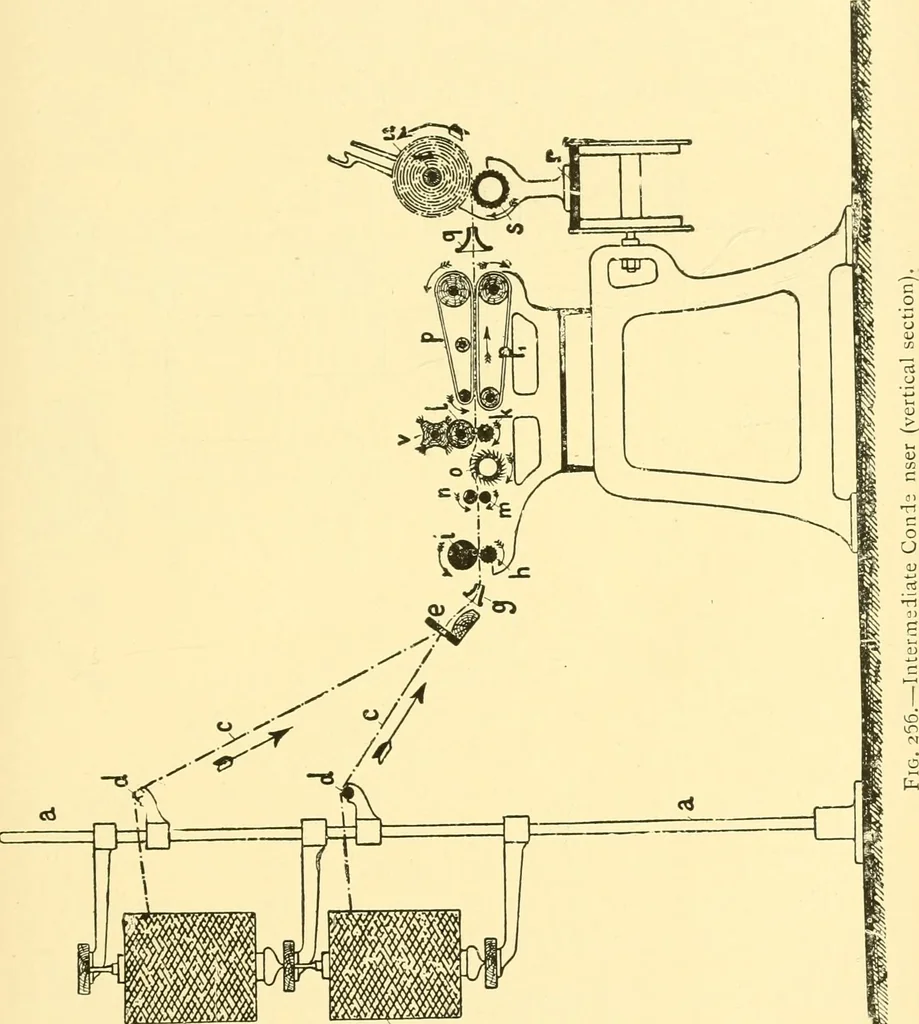
nd arrangement are the same as in the inter-mediate machine, only finer. N.B.—In all these drawing and condensing frames thenumber of slivers formed ranges from 2 to 100, accordingto the number of heads in the frame. The term head hereimplies each subdivision of the rollers in front of the… … always two bobbins to each head in the second intermediateand fine condensers, whilst in the finisher or roving machinethere are always four. 428 TEXTILE RAW MATERIALS. Generally, non-condensing drawing frames, for simpledoubling, have 4 heads with 4 bobbins ; for four-fold doubling,10 heads with…
Textile fibers · Spinning
Internet Archive · UMass Dartmouth, Claire T. Carney Library · Public Domain Mark 1.0. Free to use for anything.