Textile raw materials and their conversion into yarns : (the study of the raw materials and the technology of the spinning process) a text-book for textile, trade and higher technical schools, as also for self-instruction ; based upon the ordinary syllabus and curriculum of the Imperial and Royal Austrian weaving schools (1901)
Zipser, Julius, Salter, Charles · London : Scott, Greenwood · leaf 458
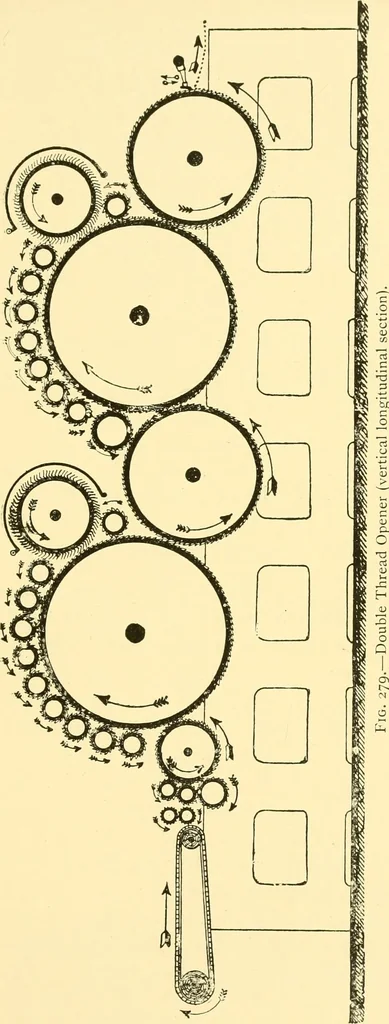
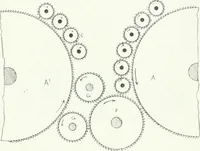
t opener than either ofthe foregoing, since it contains a larger number of rollers, andtherefore a larger area of working surface. The openedmaterial, instead of being flung out loose by a roller brush, isremoved as a coherent fleece by the action of an oscillatingdoffer comb. Latterly, double… … 452 TEXTILE RAW MATERIALS. B.—EXTRACT WOOL. Extract rags consist of mixed fibre rags containing woolalong with cotton, flax, and other vegetable fibres, and serveas the raw material for the manufacture of extract wool oralpaca. The operations required in this process include shak-ing, scouring,…
Textile fibers · Spinning
Internet Archive · UMass Dartmouth, Claire T. Carney Library · Public Domain Mark 1.0. Free to use for anything.