The theory and practice of modern framed structures : designed for the use of schools, and for engineers in professional practice (1897)
Johnson, J. B. (John Butler), 1850-1902, Bryan, C. W. (Charles Walter), 1863-1927, Turneaure, Frederick Eugene, 1886- · New York : J. Wiley & Sons · leaf 400
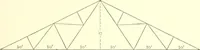
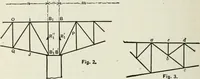
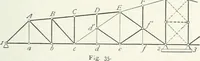
bythe use of adjustable rods, which are objectionable in any truss design, owing to their ten-dency to get out of adjustment. However, the most important objection to this form of con-struction is the lack of economy in the design. 374. Standard Forms of Trusses.—As previously stated the most… … Fig. 388. of any length. The principal advantages in this form are, economy in design, a minimumnumber of members, the absence of all adjustable members, a freedom from all ambiguities inthe stresses, etc. In this design, the members AD should have such an inclination that whenthe bridge is fully…