The wonders of the heavens, being a popular view of astronomy, including a full illustration of the mechanism of the heavens; embracing the sun, moon, and stars, with descriptions of the planets, comets, fixed stars, double stars, the constellations, the galaxy, or milky-way, the zodiacal light, aurora borealis, or norhtern lights, meteors, clouds, falling stars, aërolites, &c (1837)
Bradford, Duncan. [from old catalog] · Boston, American stationers company · leaf 108
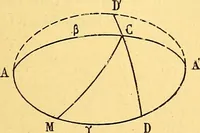
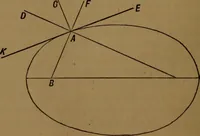
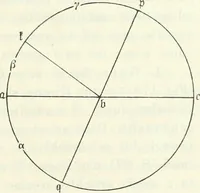
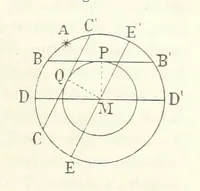
vesa constant parallelism with itself, whilst it formswith the ecliptic an angle of twenty-three anda half degrees, and marks out in the heavens acircle bearing the same name, (celestial equator,)in the same manner as if the earth were withoutits motion of revolution. The movements of theearth in… … us thence direct our sight to the earth ; we shallperceive that it is endowed with a rotation on itsaxis in twenty-four hours; and with another motion, 74 WONDERS OF THE HEAVENS. in which its centre describes a curved line in threehundred sixty-five and one fourth days nearly; theaxis remaining…
Astronomy
Internet Archive · Library of Congress · Public Domain Mark 1.0. Free to use for anything.