The wonders of the heavens, being a popular view of astronomy, including a full illustration of the mechanism of the heavens; embracing the sun, moon, and stars, with descriptions of the planets, comets, fixed stars, double stars, the constellations, the galaxy, or milky-way, the zodiacal light, aurora borealis, or norhtern lights, meteors, clouds, falling stars, aërolites, &c (1837)
Bradford, Duncan. [from old catalog] · Boston, American stationers company · leaf 381
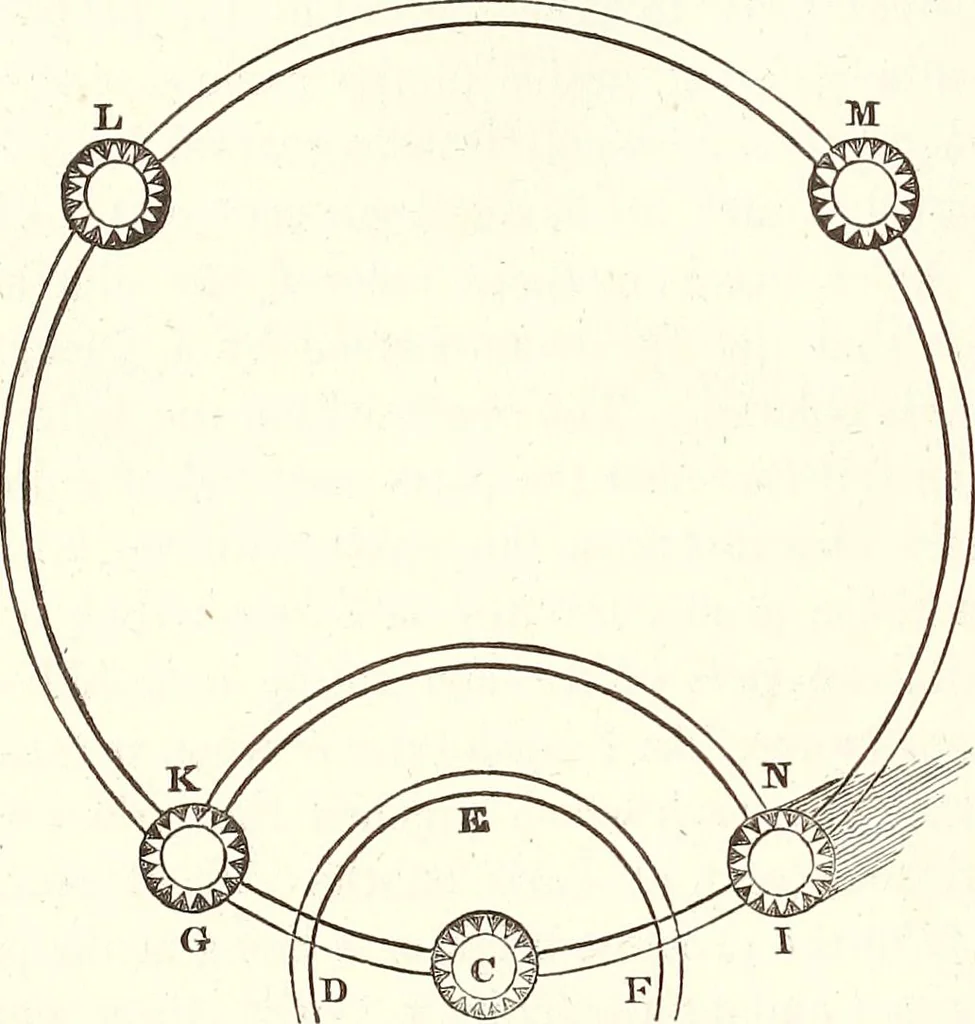
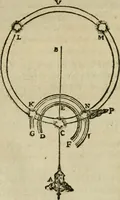
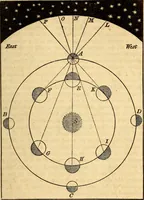
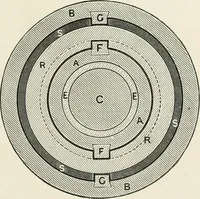
DERS OF THE HEAVENS to the horizon, passing through the sun, and ofnearly the same breadth as that luminary; as wasobserved in the phenomenon seen at Rome in 1629,of which Gassendus and Descartes have written,and of which the following figure is a representa-tion. The circle L K N M is caused by… … whence it follows that the circle must appearwhite, of equal altitude with the sun, and conse-quently parallel to the horizon. Considering thetransparency of these perpendicular cylinders andtheir opaque kernels, it is easily seen that those ofthe white circle which are distant from the sun ata…
Astronomy
Internet Archive · Library of Congress · Public Domain Mark 1.0. Free to use for anything.