The young astronomer; or, The facts developed by modern astronomy, collected for the use of schools and the general reader (1847)
Abbott, John S. C. (John Stevens Cabot), 1805-1877 · New York, J.C. Riker [etc.] · leaf 38
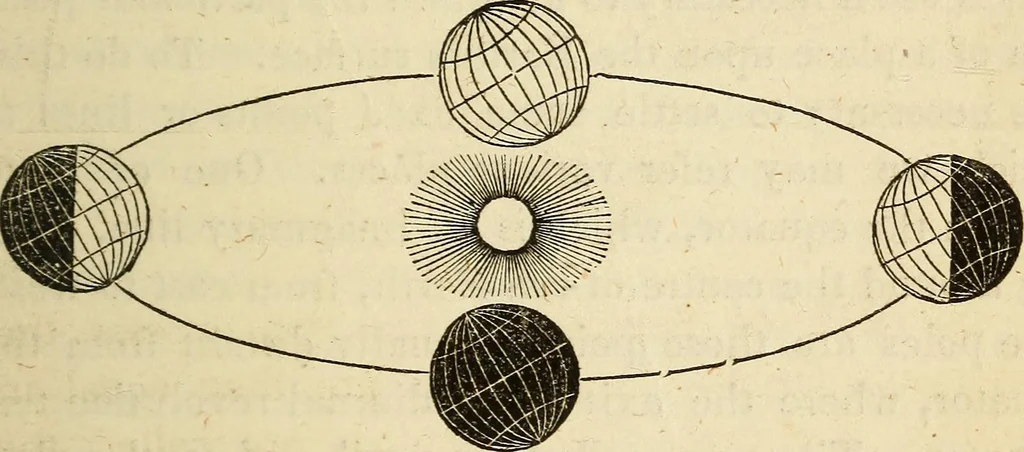
nal equinox. The shortest day and the longest night north of theequator are on the 21st of December. This time iscalled the winter solstice. It is so called from twoLatin words, signifying that the Sun stands or stops.At that time, the Sun apparently ceases going anyfarther south, and returns again… … Nearly three-quarters of the surface of the Earth iscovered with water. The present population of the What is the autumnal equinox ? Between which of the equinoxesis there the longest time ? How much the longest ? When is theshortest day ? What is this period called ? From what is this namederived…
Astronomy
Internet Archive · Library of Congress · Public Domain Mark 1.0. Free to use for anything.