An elementary treatise on mechanics, embracing the theory of statics and dynamics, and its applications to solids and fluids (1849)
Smith, Augustus William, 1802-1866 · New York, Harper · leaf 162
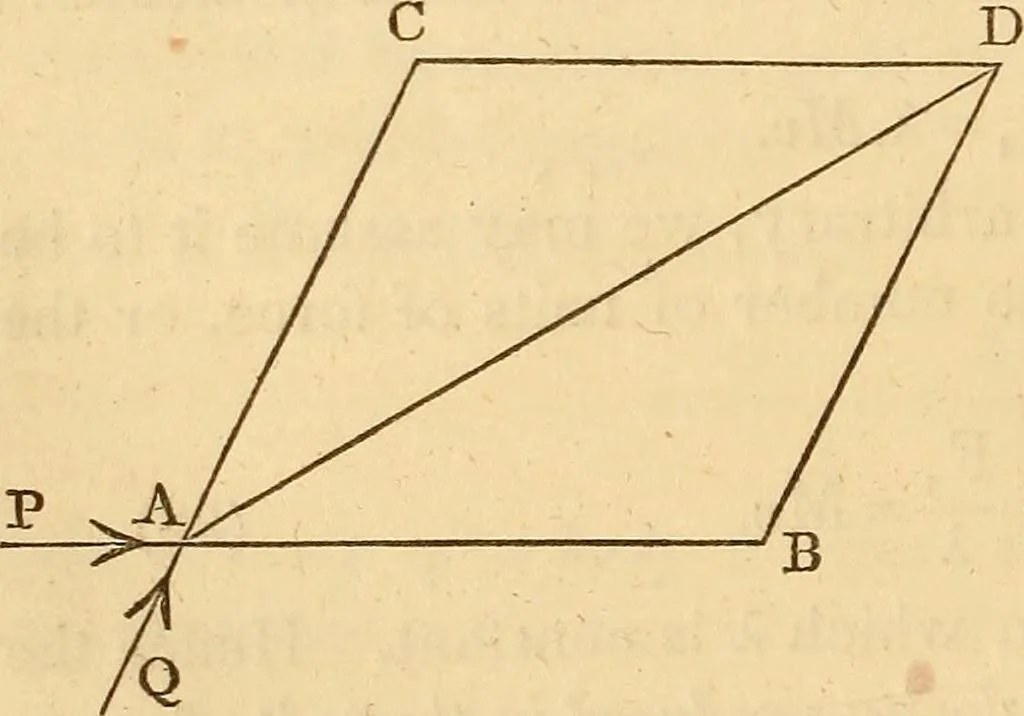
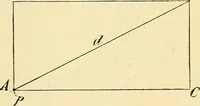
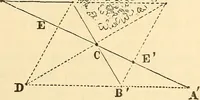
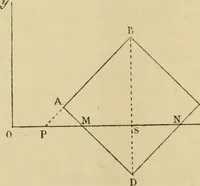
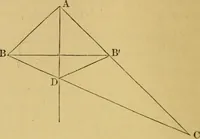
the velocities which two forces, bytheir separate action, would respectively produce in a body, thediagonal of the parallelogram will represent the actual velocityproduced by their joint action. Let AB and AC represent the velocities which the forces P and Q respectively im-part to a body placed… … UNIFORM MOTION. 139 which the body will pass in the unit of time by the joint actionof the forces. We may assume AB to represent the force P ; then, by Art.233, Cor., P : Q=AB : AC,and AC will represent the force Q. Also, Art. 21, AD willbe the resultant R of P and Q. Let x be the velocity due…
Mechanics, Analytic
Internet Archive · Library of Congress · Public Domain Mark 1.0. Free to use for anything.