Field-book for railroad engineers. Containing formulas for laying out curves, determining frog angles, levelling, calculating earth-work, etc., etc., together with tables of radii, ordinates deflections, long chords, magnetic variation, logarithms, logarithmic and natural sines, tangents, etc., etc (1877)
Henck, John Benjamin, 1816-1903 · New York : D. Appleton · leaf 56
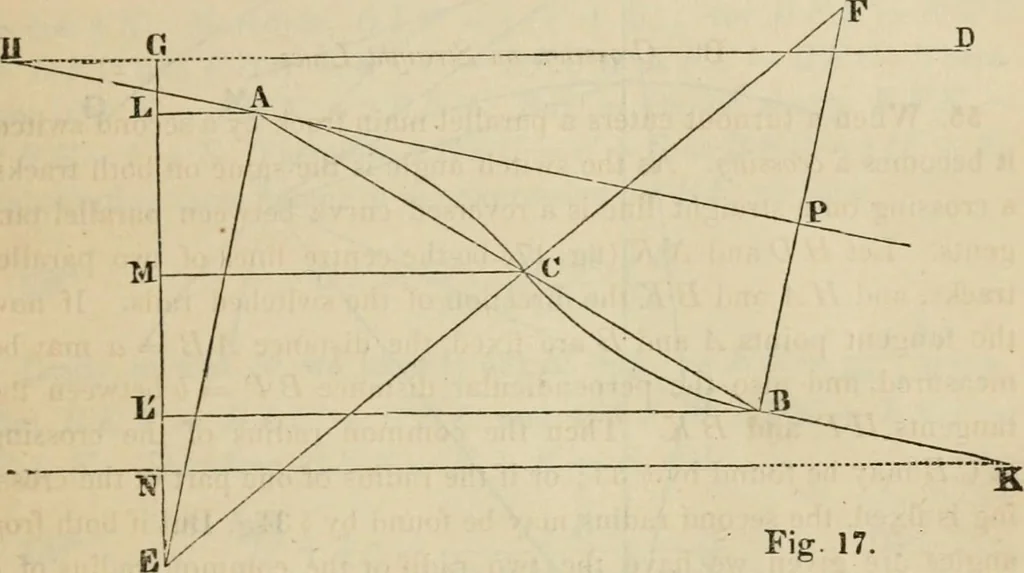
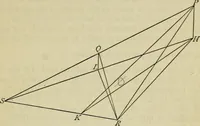
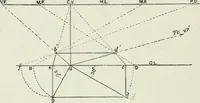
R : R -\-R, whence L M = j^ , „, -. Substituting these values of E L and L Mm the equation for R cos. {E + S), we have R cos. {E -\- S) = R cos. S —■R{b — 2d) R4- R ■> CROSSINGS ON STRAIGHT LINES. S? G^ / n 1 e\ c b — 2d COS. {L + S) = COS. o — — A + R Having thus found jE + S, we have the angle… … Fig. 17. Whcu the two radii are equal, the same formulae apply by makingR = R. In this case, we have COS. (E-\-S) = COS. S — ~^ ; 2 72 AC= BC= 2Rs\n.^E. Example. Given d = .42, g = 4.7, 5=1° 20, 6 = 11, and the an-gles of the two frogs each 7°, to find A C = B C =^A B. Thecommon radius 72,…
Railroad engineering · Ferrovias
Internet Archive · Public Domain Mark 1.0. Free to use for anything.