Mathematics for engineering students, Analytical geometry and calculus (1907)
Keller, S. S. (Samuel Smith), 1867-1923, Knox, W. F., [from old catalog] joint author · New York : D. Van Nostrand company · leaf 192
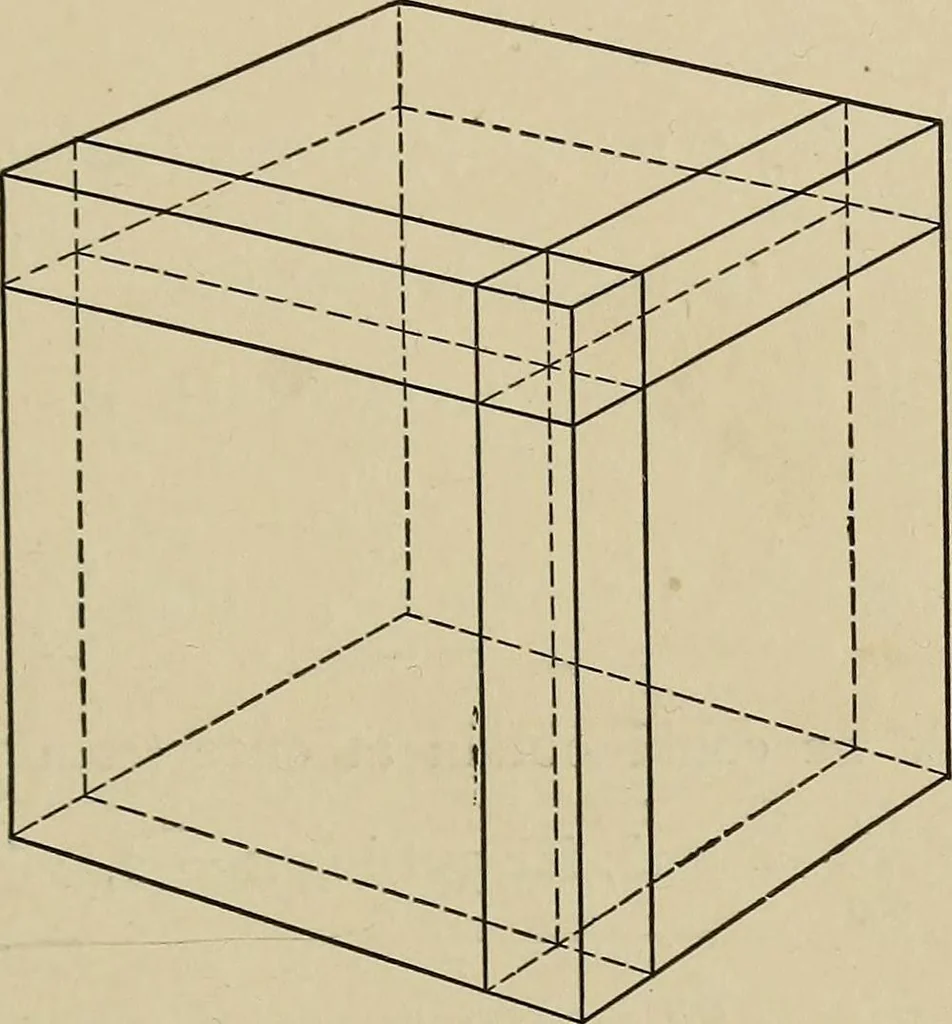
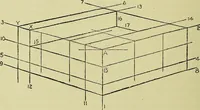
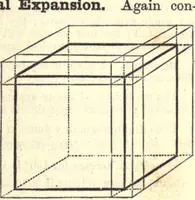
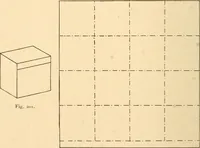
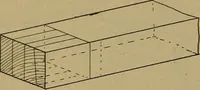
sentthe volume of a cube = y. Now let x increase by Ax, then x + Ax will form the sideof a second larger cube whose volume is y + Ay. Now if we examine Fig. 5, we see that Ay which is thedifference in volume of the two cubes, (x + Ax)3 and x3,is made up of three slabs each of dimensions x. x . Ax=… … Fig. 5. If Ax becomes dx then,dy _dx 3 x2 + 3 x . dx + (dx)2 Now both 3^;.^ and (dx)2 are evanescent, but remember-ing the ratio of the infinitely small quantities dy, dx, is finite,it is in fact the quotient 3 x2. Hence if y = x3 then — = 3 x2,dx or dy = 3 x2 dx. Therefore the differential…
Geometry, Analytic · Calculus
Internet Archive · Library of Congress · Public Domain Mark 1.0. Free to use for anything.