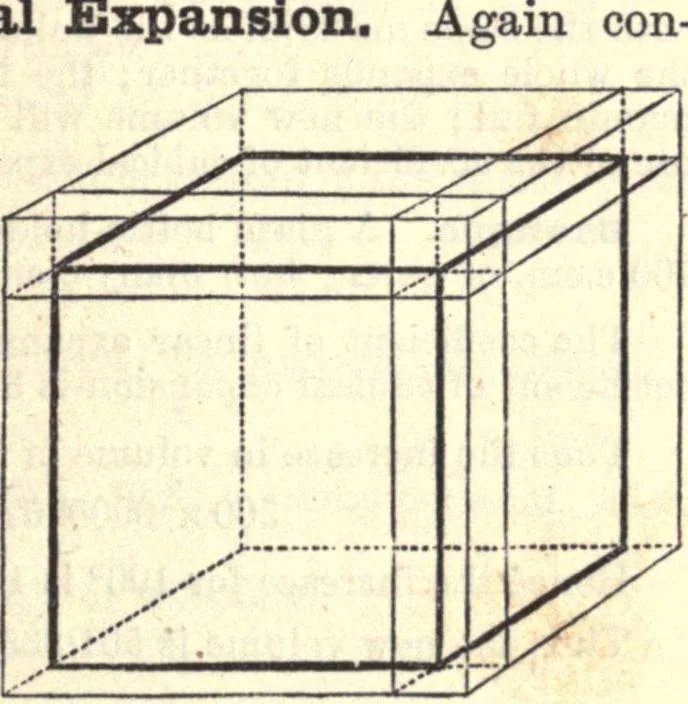
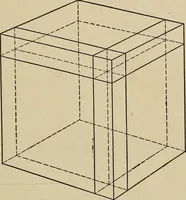
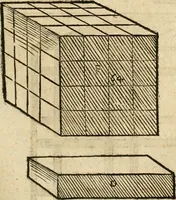
achedge equal to (1 + a) cm. Thiscube is made up of the ori-ginal cube together with threesquare slabs each of which is1 square cm. in area and a cm.thick, three rectangular stripseach 1 cm. high on a base ofa2 square cm. and a small cubewhose edge is a cm. Thus the new volume is l + 3a+3a2 + a3.… … Fig. 28. 66 HEAT. [CH. V Hence we have 1 + y = 1 + 3a. y = 3a. The coefficient of cubical expansion is very often called thecoefficient of dilatation. The coefficient of superficial expansion is usually found bydetermining the coefficient of linear expansion and multiplyingby 2. Methods have been…
Heat · Light
Internet Archive · California Digital Library · Public Domain Mark 1.0. Free to use for anything.
![An illustration from Divina proportione : opera a tutti glingegni perspicaci e curiosi necessaria oue ciascun studioso di philosophia: prospettiua pictura sculptura: architectura: musica: e altre mathematice: suavissima: sotile: e admirabile doctrina consequira: e delecterassi: co[n] varie questione de secretissima scientia (1509)](https://img.insideoutlibrary.com/img/200/ia-divinaproportion00paci-280-452.webp)