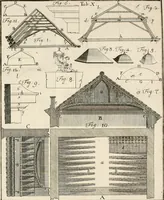
Mechanical exercises, or, The elements and practice of carpentry, joinery, bricklaying, masonry, slating, plastering, painting, smithing, and turning (1812)
Nicholson, Peter, 1765-1844 · London: J. Taylor · leaf 134
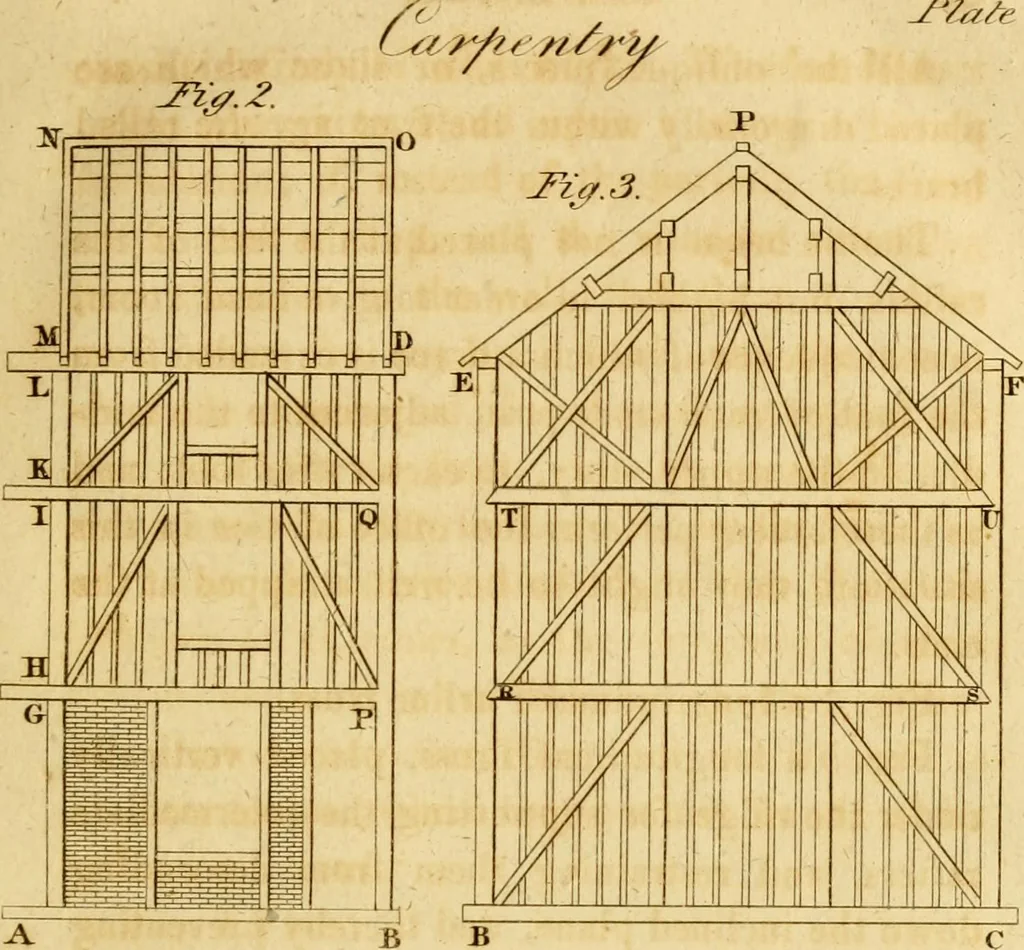
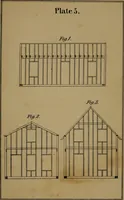
ir gravity woulddescend, and consequently approach nearer to-gether, and therefore, instead of pushing out thewalls, would rather have a tendency to drawthem in. This principle, as well as trussing theinclined sides of a roof, was discovered by theauthor many years ago, in consequence of a… … I 1 I I I M I 1 I I Ti^.I. \^^ .^^ Fz^.4. Ti^.^. ^Z^ Ximdonl^TtblihairMzrcfi tfijStliyJT<!i7^TnSu^iffo76en-r,. 21 81INDEX AND EXPLANATION OF TERMS USED IN CARPENTRY. N. B; This Mark § refers to the preceding Sectionsaccording to the Number. A; Adze, § 5. Axe, § 4. Auger, § 10. B. Back of a Hip…