Mechanical movements, powers and devices; a treatise describing mechanical movements and devices used in constructive and operative machinery and the mechanical arts, being practically a mechanical dictionary, commencing with a rudimentary description of the early known mechanical powers and detailing the various motions, appliances and inventions used in the mechanical arts to the present time, including a chapter on straight line movements, by Gardner D. Hiscox (1914)
Hiscox, Gardner Dexter, 1822?-1908 · New York, The Norman W. Henley publishing co. · leaf 156
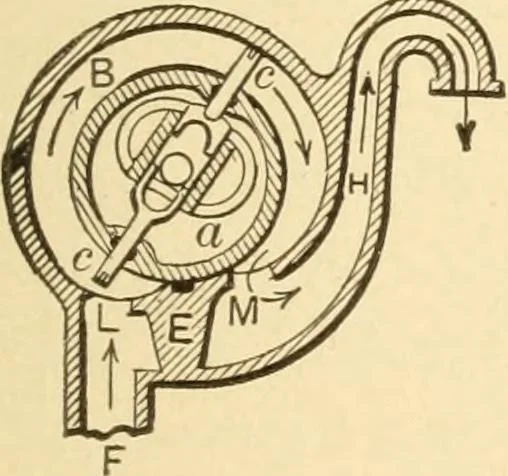
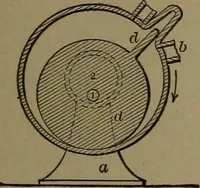
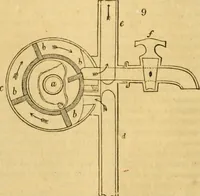
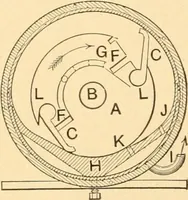
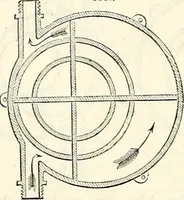
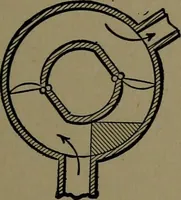
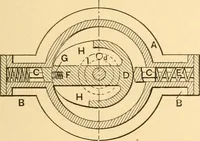
534. ROTARY PUMP OR MOTOR.— Can be run in either direction. The shell andwing drum are eccentric. The wings are guidedby projections running in a concentric groovein each head. … 535. GARY ROTARY PUMP.—A rotat-ing drum concentric with the outer fixed cylinderand a fixed heart-shaped^cam groove in which thesliding wings are guided. A stop, E, closes thesuction and force side of the chamber. The formof the outer cylinder wall is spiral.
Mechanical movements
Internet Archive · Library of Congress · Public Domain Mark 1.0. Free to use for anything.