Mechanical movements, powers and devices; a treatise describing mechanical movements and devices used in constructive and operative machinery and the mechanical arts, being practically a mechanical dictionary, commencing with a rudimentary description of the early known mechanical powers and detailing the various motions, appliances and inventions used in the mechanical arts to the present time, including a chapter on straight line movements, by Gardner D. Hiscox (1914)
Hiscox, Gardner Dexter, 1822?-1908 · New York, The Norman W. Henley publishing co. · leaf 170
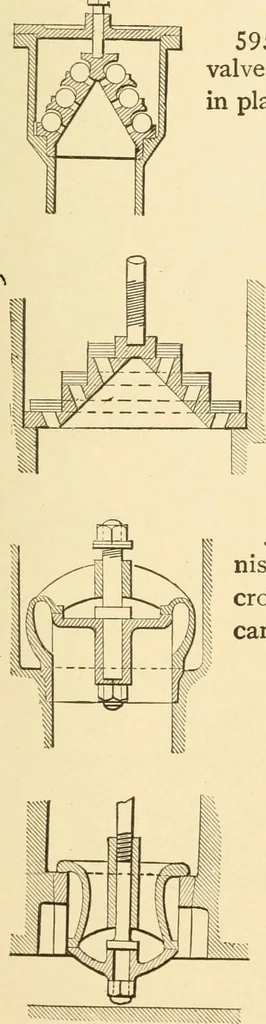
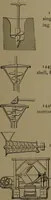
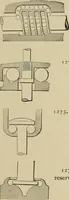
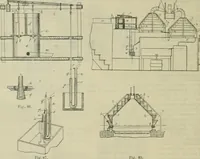
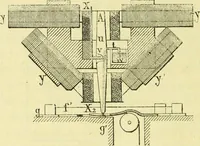
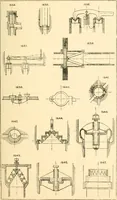
594. HYDRAULIC VALVE, used onelevators. Cylindrical in form, the valvesmove across the ports by a rock shaft andarms. A, pressure chamber. B, C, to elevatorcylinder. … 595. MULTIPLE BALL VALVE.—The cone-valve seat is in two parts ; the cover or cage is heldin place by the screw in the cap. 596. MULTIPLE RING VALVE,enlarged valve area with small lift. for 597. DOUBLErBEAT PUMP VALVE, Cor- nish model. The upper seat is supported by a cross-bar, in which is fixed…
Mechanical movements
Internet Archive · Library of Congress · Public Domain Mark 1.0. Free to use for anything.