Mechanical movements, powers and devices; a treatise describing mechanical movements and devices used in constructive and operative machinery and the mechanical arts, being practically a mechanical dictionary, commencing with a rudimentary description of the early known mechanical powers and detailing the various motions, appliances and inventions used in the mechanical arts to the present time, including a chapter on straight line movements, by Gardner D. Hiscox (1914)
Hiscox, Gardner Dexter, 1822?-1908 · New York, The Norman W. Henley publishing co. · leaf 78
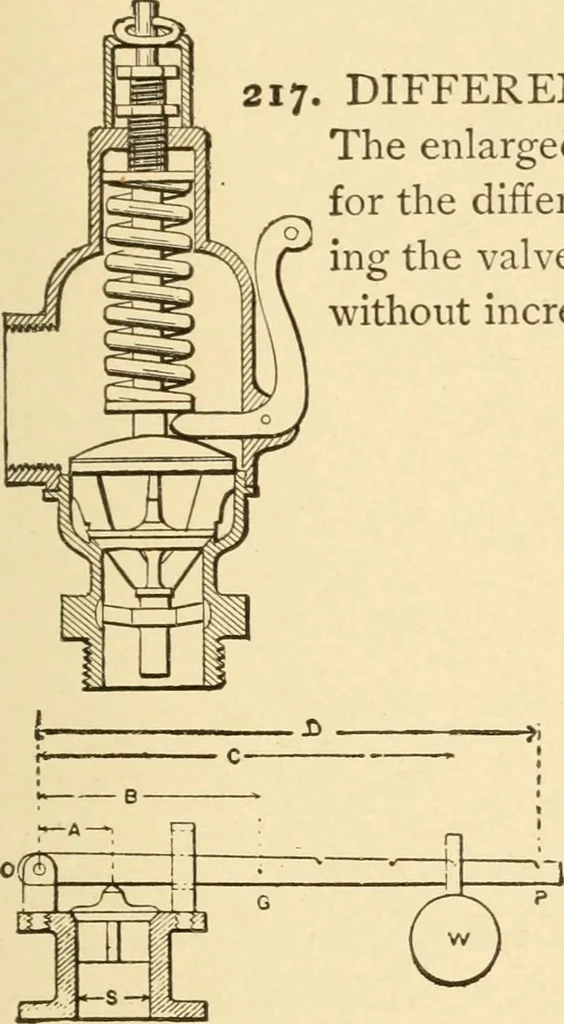
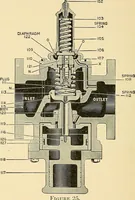
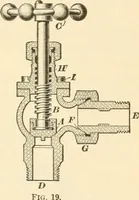
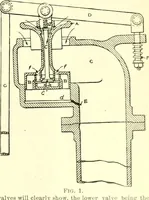
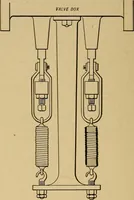
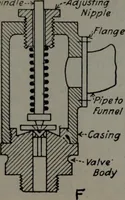
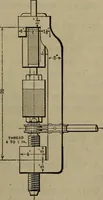
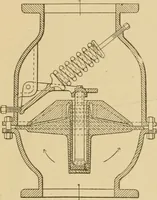
216. POP SAFETY VALVE.—The Lun- kenheimer, an enlarged lip disc above the valvedisc, equalizes the increased tension of the springwhen the valve opens. STEAM POWER. 67 … DIFFERENTIAL SEAT SAFETY VALVE.— The enlarged area of the upper valve compensatesfor the differential tension of the spring upon open-ing the valve, thus causing the valve to open widewithout increase of boiler pressure. 218. SAFETY VALVE,—Lever is of the third order. A, Short lever;B, centre of…
Mechanical movements
Internet Archive · Library of Congress · Public Domain Mark 1.0. Free to use for anything.