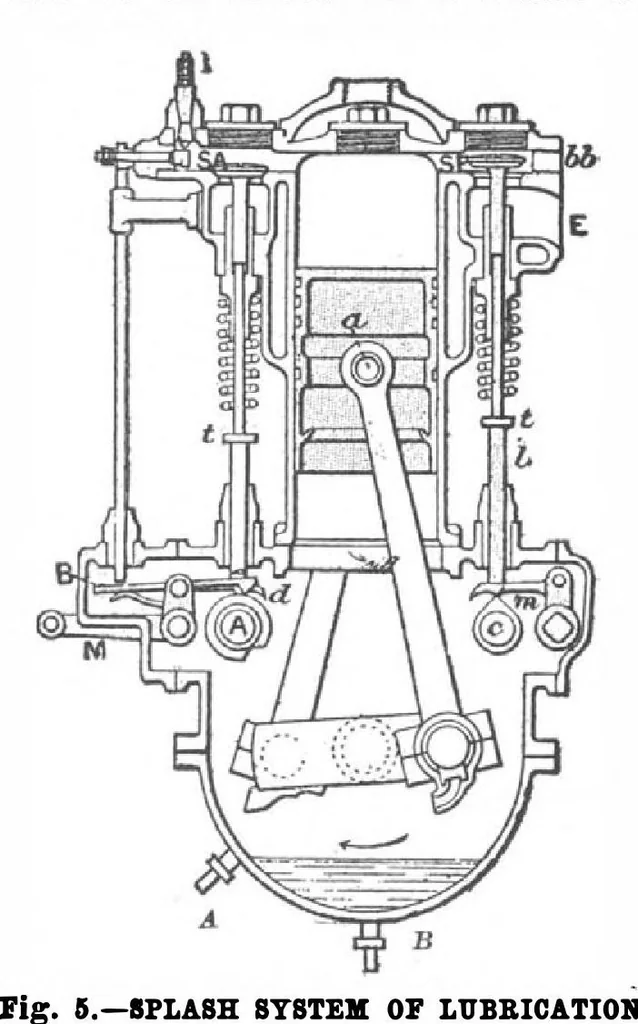
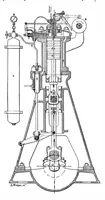
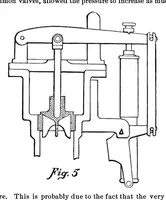
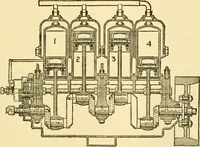
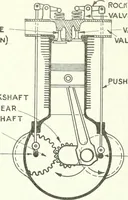
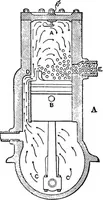
dinary ma- ably. Some say that crude oil comes from inorganic joints, ball bearings, and transmissions and main-bear- chinery oils as a special automobile oil. substances, while others claim that it is of organic ings of 2-cycle engines. origin. At any rate, one fact remains': All mineral… … bearings and oilways drilled in the crankshaft to the connecting-rod bear- Fig. S.—SPLASH SYSTEM OF LUBRICATION. (600 deg.), and sufficient viscosity to adhere to ings. The oil pnmp. not shown, is at C. D is a glass showing height of oil the very hot cylinder walls. The table will en- .4-isacock to…
Automobile · Tire · Tires · Shaft · Oil · Engine · Magneto · Motor · Scientific American · Gasoline · Three speeds · Speeds forward · Motor car · Spark plug · Rear axle · Sliding gear · American january · Solid tires · Cross bar
Internet Archive · Public domain (published before 1931). Free to use for anything.