The theory and practice of modern framed structures : designed for the use of schools, and for engineers in professional practice (1897)
Johnson, J. B. (John Butler), 1850-1902, Bryan, C. W. (Charles Walter), 1863-1927, Turneaure, Frederick Eugene, 1886- · New York : J. Wiley & Sons · leaf 332
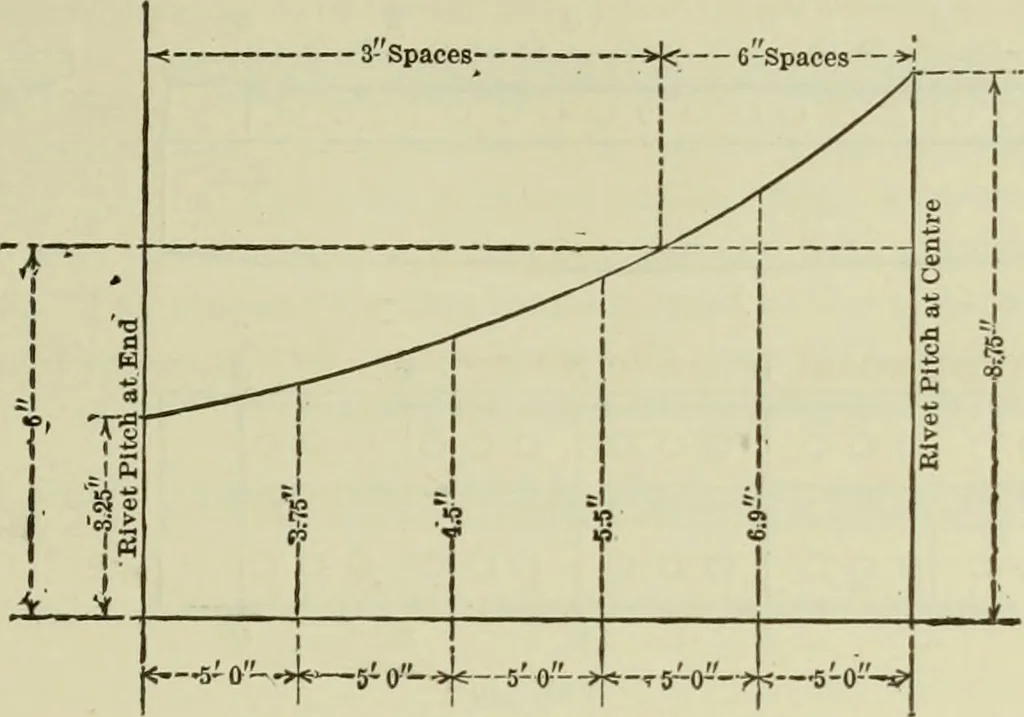
e sufficient in the lower flange would be determined by Fig. 347,and where they may begin in the top flange by Fig. 348. TH£ Plate QiRD£:k. This spacing is taken because it will enable us to put the rivets in the bottom flangeangles on the same vertical lines as those in the top flange angles, and… … Fig. 348. be about the same as if we had used the spacing indicated by Fig. 348 for both flanges, whichis the practical alternative. The rivets through the flange plates and angles are always stag-gered as much as possible with those through the web and flange angles. The pitch is madesix inches…