Twentieth century handbook for steam engineers and electricians, with questions and answers; a practical nontechnical treatise on the care and management of steam engines, boilers and electric machinery (1922)
Swingle, Calvin Franklin, 1846- [from old catalog] · Chicago, F. J. Drake & company · leaf 1150
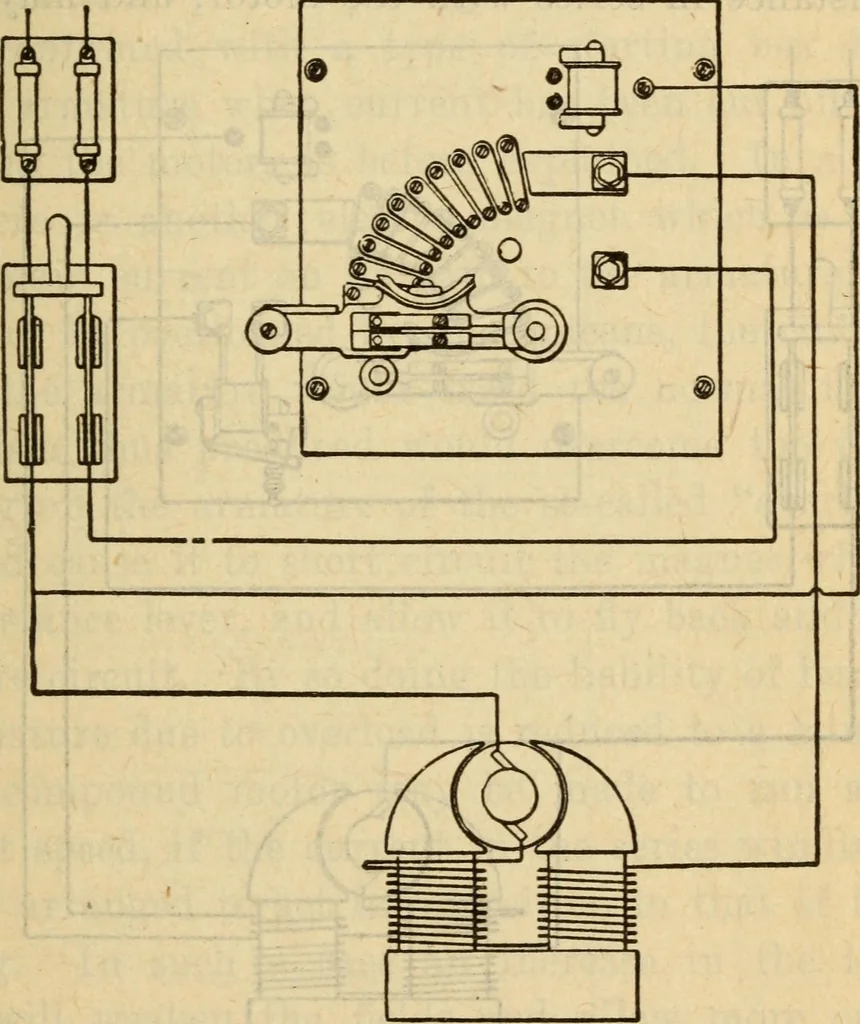
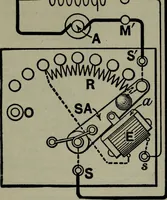
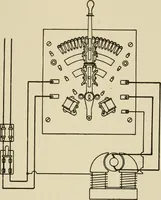
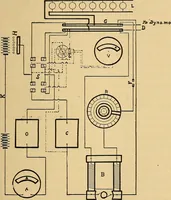
nthe starting box, to the motor armature and it begins torevolve, and as we continue to move the arm to the right,the armature gains in speed because w^e admit more current Electric Motors 1115 to it by cutting out more and more resistance. When thearmature attains full speedy the arm comes in… … Fig. 487 When the armature has attained its normal speed, thestarting box is no longer in use. If for any reason thecurrent ceases to flow, the little magnet M loses its magnet-ism and releases the arm, which (actuated by a spring)flies back and opens the circuit so that, should the currentsuddenly…