Astronomy for the use of schools and academies (1882)
Gillet, J. A. (Joseph Anthony), 1837-1908, Rolfe, W. J. (William James), 1827-1910 · New York : Potter, Ainsworth, & Co. · leaf 25
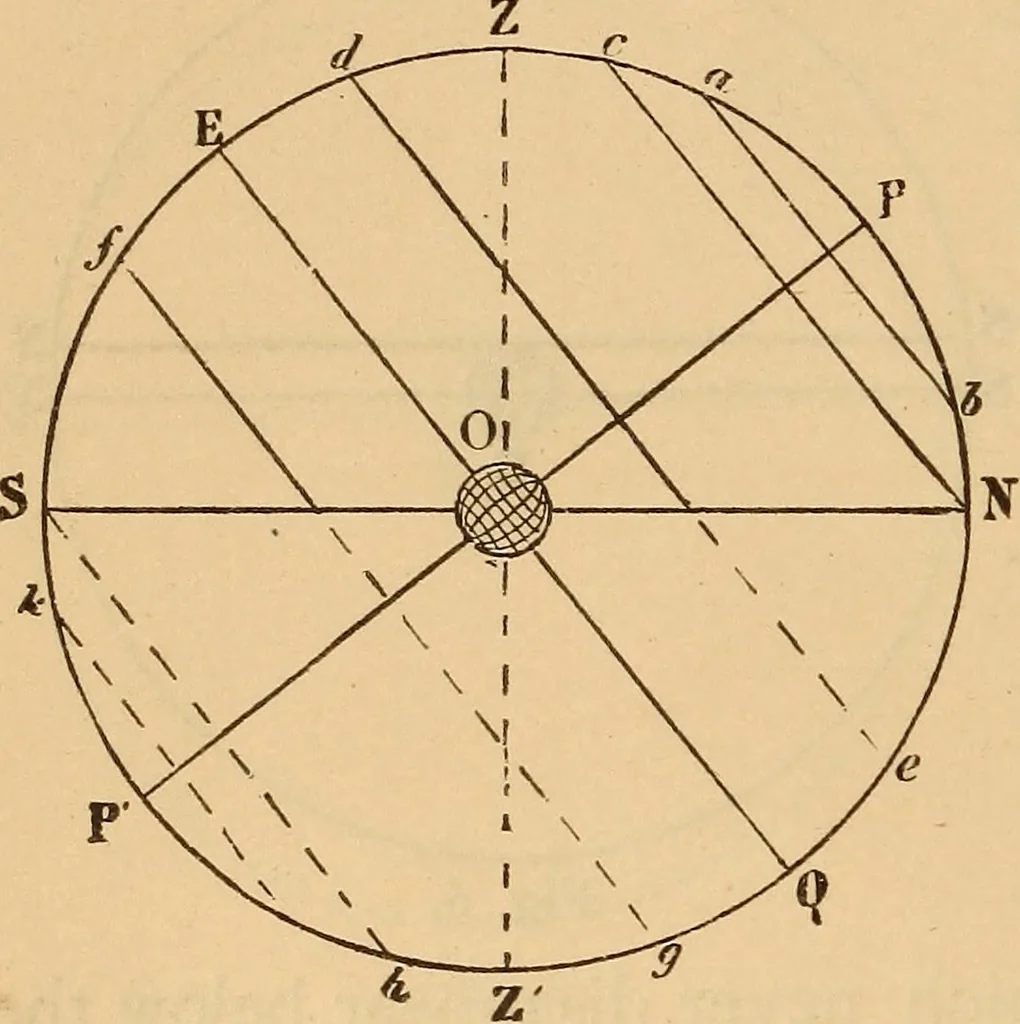
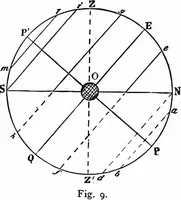
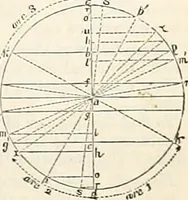
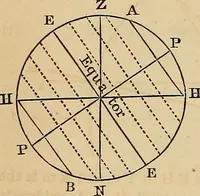
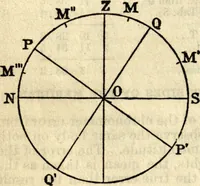
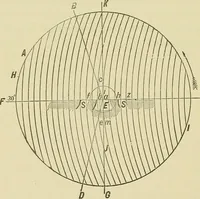
he heavens, thestars appear to describe circles which are perpendicular tothe celestial axis, and parallel with the celestial equator.These circles are called diurnal circles. The position of the poles in the heavensand the direction of thediurnal circles with referenceto the horizon, change… … Fig. 8. vated above the horizon, and the south pole is depressedbelow it, and the diurnal circles are oblique to the horizon,leaning to the south. This case is represented in Fig. 8, inwhich P P represents thecelestial axis, E Q the celes-tial equator, SiVthe horizon,and ab, c JV, de, fg, Sh,k /,…
Astronomy
Internet Archive · Library of Congress · Public Domain Mark 1.0. Free to use for anything.