Mechanical movements, powers and devices; a treatise describing mechanical movements and devices used in constructive and operative machinery and the mechanical arts, being practically a mechanical dictionary, commencing with a rudimentary description of the early known mechanical powers and detailing the various motions, appliances and inventions used in the mechanical arts to the present time, including a chapter on straight line movements, by Gardner D. Hiscox (1914)
Hiscox, Gardner Dexter, 1822?-1908 · New York, The Norman W. Henley publishing co. · leaf 185
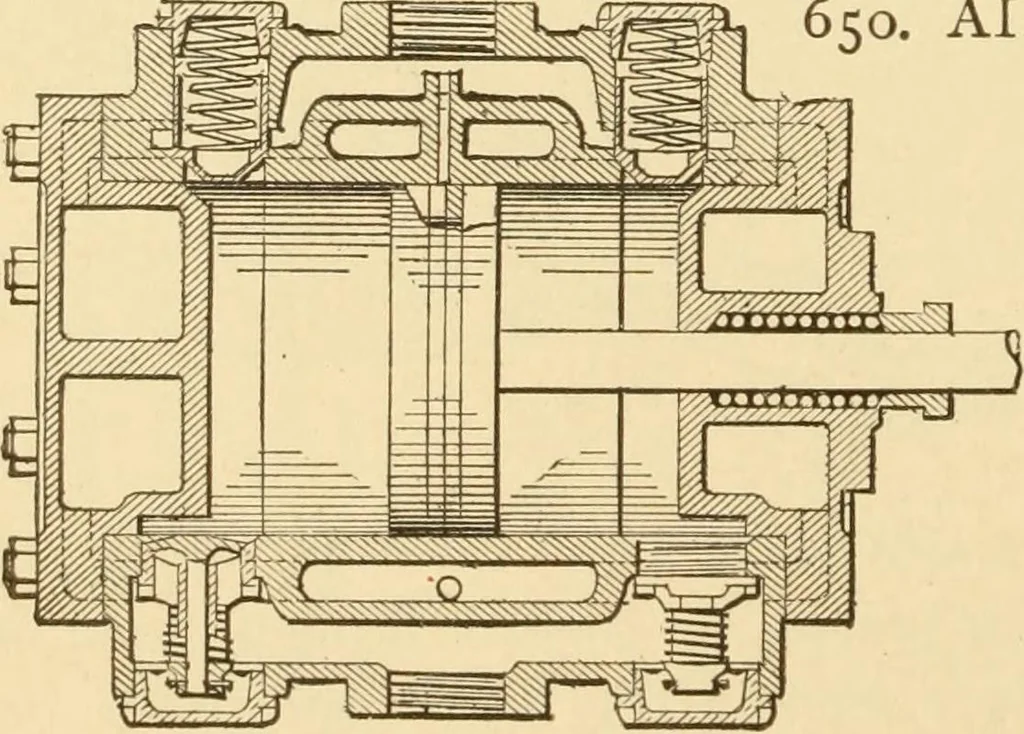
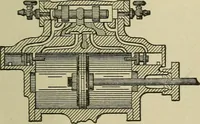
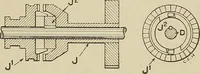
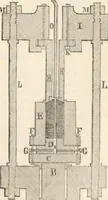
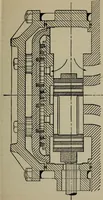
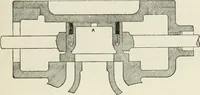
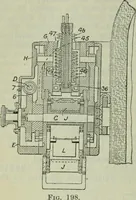
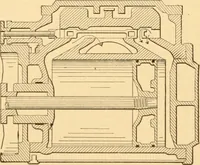
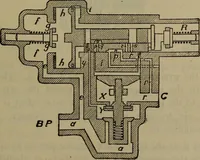
649. AIR COMPRES- SOR CYLINDER, PIS- IJ^.TON AND VALVES.— Pattern of the Ingersoll,Sergeant Drill Co. Takesits air through a hollow pis-ton rod at E to the interiorof the pistouo The annular valves, G, G, open and close by theirmomentum. H, H, discharge valves closed by springs; J, J, waterjacket. … 650. AIR COMPRESSING CYLIN-DER, with vertical lift valves,water-jacketed cylinder andheads. IngersoU-Sergeantmodel. AIR POWER APPLIANCES. 175
Mechanical movements
Internet Archive · Library of Congress · Public Domain Mark 1.0. Free to use for anything.