The principles underlying radio communication (1922)
United States. National Bureau of Standards, Ould, Richard Sheldon, 1889-, United States. Army. Signal Corps · Washington, Govt. Print. Off. · leaf 279
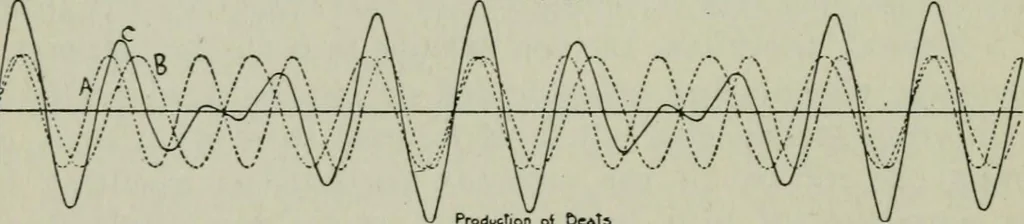
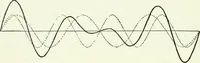
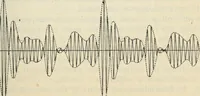
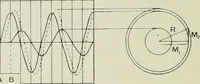
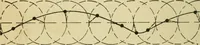
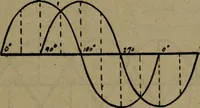
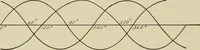
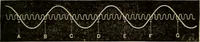
ing from two tuning forks which are vibrating withsomewhat different frequencies. The sound which is heardalternately increases and decreases in loudness, giving the phe-nomenon of beats. The number of beats per second is equalto the difference in frequencies of the two forks. Thus, if twoforks… … Production ot imSi Free oscillations in coupled circuits are damped, so that inaddition to the alternate waxing and waning of the resultantoscillation, the energy of the oscillation as a whole dies awayaccording to the laws already treated in Section 116. Fig. 154shows the nature of the damped…
Telegraph, Wireless · Radio
Internet Archive · Public Domain Mark 1.0. Free to use for anything.