Radio for everybody; being a popular guide to practical radio-phone reception and transmission and to the dot-and-dash reception and transmission of the radio telegraph, for the layman who wants to apply radio for his pleasure and profit without going into the special theories and the intricacies of the art (1922)
Lescarboura, Austin C. (Austin Celestin), 1891- · New York, Scientific American publishing company [etc.] · leaf 114
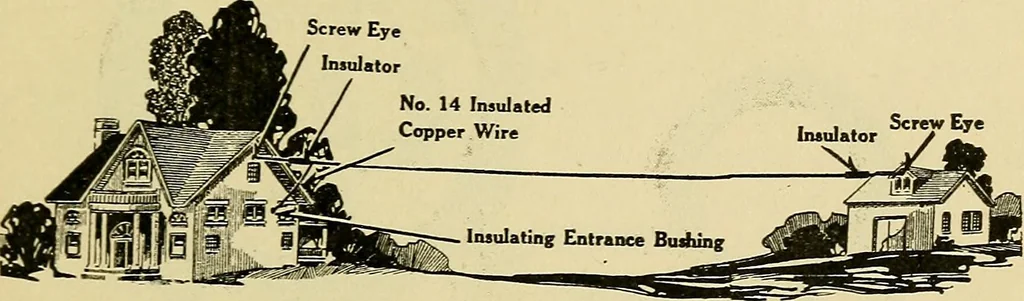
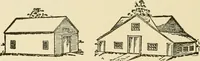
t mayseem, also detracts from the receiving efficiency. Thereason for this is that the wave length of the aerialshould be as nearly as possible that of the radio waves tobe intercepted. Otherwise, in the case of a shorter wire,it is necessary to add inductance in order to bring up thewave length,… … How a receiving antenna may be installed in the country. The single wire may be run from the house to a barn, tree, clothes pole or other support. wave, but it is necessary to use either a variable or fixedcondenser in series with the antenna in order to bringdown the wave length, and such practice…
Radio
Internet Archive · Boston College Libraries · Public Domain Mark 1.0. Free to use for anything.