Vapors for heat engines, including considerations relating to the use of fluids other than steam for power generation; a study of desirable vacuum limits in simple condensing engines: methods for computing efficiencies of vapor cycles with limited expansion and superheat; a volume-temperature equation for dry steam, and new temperature-entropy diagrams for various engineering vapors (1912)
Ennis, William D. (William Duane), b. 1877 · New York, D. Van Nostrand Company · leaf 35
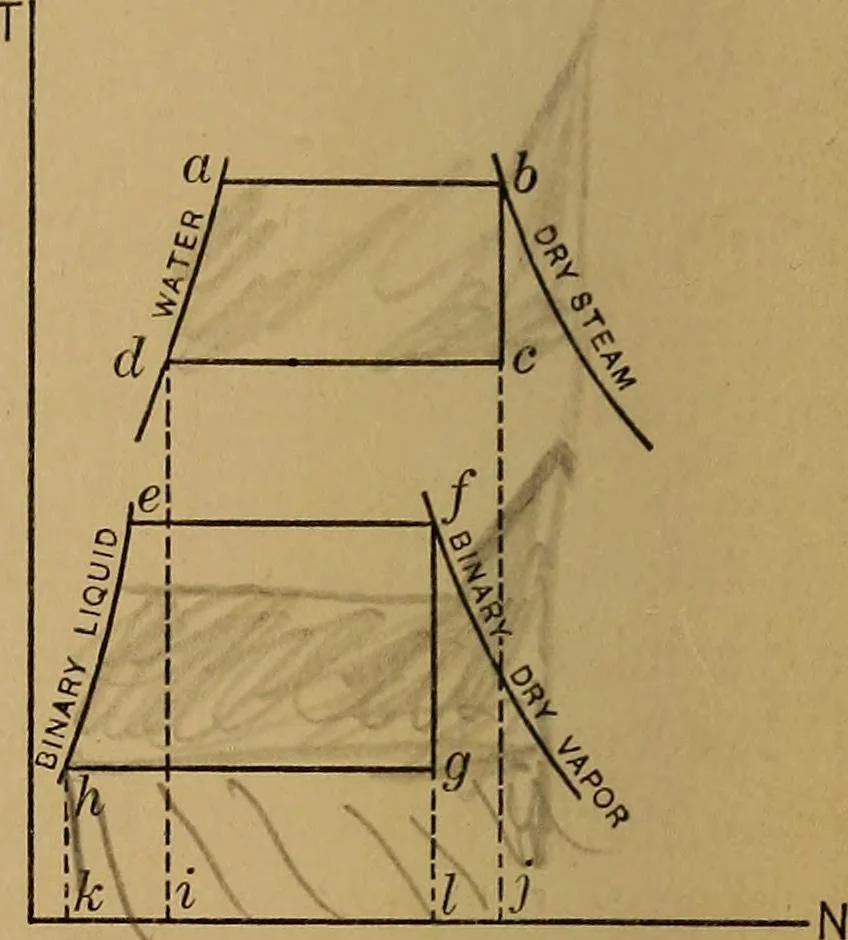
Fig. 3.—The Binary Vapor Principleabcd= primary tfgh= binary Ideally, idcj = khefl circulation of a more volatile fluid in the condenser coils.This second fluid is thus vaporized and may be used toperform work in a second cylinder. We may therebywork down to the cooling water limit of…
Heat-engines · Vapors
Internet Archive · Library of Congress · Public Domain Mark 1.0. Free to use for anything.